Mr. Black
All the Bright PlacesMr. Black is the U.S. Geography teacher whose lessons make Indiana itself the subject of a senior-year assignment. His physical presence and wheezing delivery first make him a comic classroom figure, but his project gives practical shape to the book’s recurring idea of wandering: students must leave the classroom, visit places, and look closely at the state they might soon leave behind.
Identity and Classroom Presence
Finch describes Mr. Black as the largest man he has ever seen, with a very red face that makes him look close to heatstroke or a heart attack. He wheezes as he speaks, and that breathlessness repeatedly interrupts the rhythm of his lessons. The narration’s comic comparisons do not make him a caricature alone: Mr. Black remains the adult responsible for translating the school’s geography curriculum into an assignment with real consequences for his students.
His classroom manner is formal and sometimes wary. When Finch raises his hand during the lesson on Hoosier Hill, Mr. Black initially ignores him. Once he calls on him, he gives Finch an apprehensive, distrustful look and sighs. Finch’s proposal for a class field trip is only partly sincere, and Mr. Black answers with a dismissive thank-you rather than taking up the suggestion. Yet the exchange leads into the lesson’s central idea: students should see the places they are studying, not simply hear about them.
Hoosier Hill and the State Curriculum
Mr. Black introduces Hoosier Hill as the highest point in Indiana, located only eleven miles from where Finch has lived all his life. The fact surprises Finch, who reflects that neither his family nor his teachers had previously told him how near it was. In Mr. Black’s account, the hill rises 1,257 feet above sea level. An Eagle Scout from Kentucky received permission in 2005 to build a trail and picnic area and put up a sign there.
The precise figure and modest development give the lesson its slightly comic scale: the highest point in the state is not a dramatic peak but a place that can be reached by a trail behind a family home. Mr. Black presents it as an appropriate starting point for the semester, though Finch wonders whether standing there might make the landscape look different. That question turns a bare geographic fact into a reason to go and find out. When Finch later visits Hoosier Hill with Violet, the sign identifies the elevation, while the marker itself is only a wooden stake among stones. The encounter tests the grand expectations that a classroom description can create against the unassuming place on the ground.
Mr. Black teaches a unit called Wander Indiana, introduced by the school board that year to encourage students to learn about the state’s history and take pride in it. The initiative is institutional rather than his own invention, but he makes its premise concrete: a place may be difficult to appreciate without being there. Finch compares that need to experience a place with seeing the Grand Canyon or Yosemite, and Mr. Black’s lesson has already prompted him to imagine a trip to the state’s high point.
The Wonders of Indiana Project
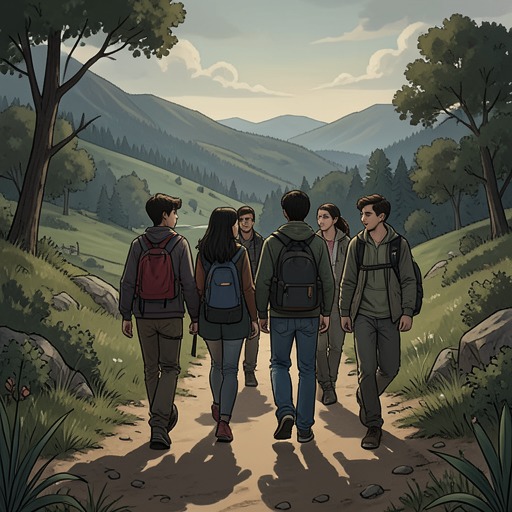
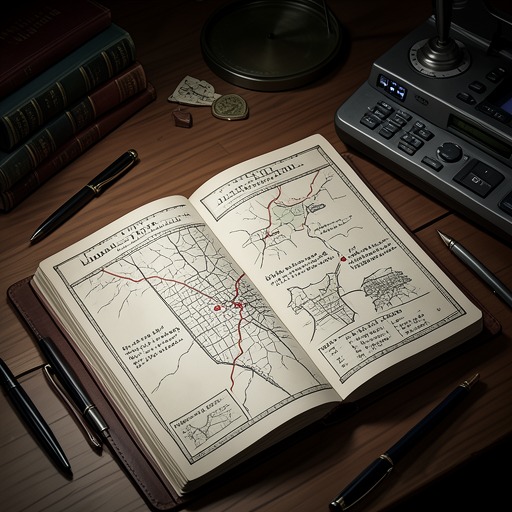
After the Hoosier Hill discussion, Mr. Black announces that students must report on at least two, preferably three, Indiana wonders. He wants them to choose places that genuinely interest them, even if the sites are obscure or distant. The class must go to each location, take photographs or video, investigate its history, and explain what makes it a source of Hoosier pride. Linking the chosen sites is welcome when possible.
The assignment is substantial: students work in pairs, have the rest of the semester to complete it, and the project counts for thirty-five percent of the final grade. Mr. Black insists that they take it seriously. Its requirements make exploration an academic obligation rather than an optional excursion, while leaving students room to choose what deserves attention. Finch asks whether the students can choose their own partners; the evidence establishes the question, not Mr. Black’s answer. The project’s open-ended form nevertheless suits Finch’s suggestion that a class should experience Indiana firsthand, even though his proposal was delivered with a measure of sarcasm.
A Teacher of Looking and Leaving
When students later ask about the project, Mr. Black urges them to visit museums, parks, and historic sites and to acquire a sense of culture they can take with them when they leave. His phrasing connects the assignment to the students’ impending departure from Indiana: some will graduate and go elsewhere, so the state is something to encounter before it becomes a place left behind. Rather than presenting geography only as information to memorize, he treats travel and observation as ways of making knowledge personal.
That idea carries beyond the lesson. Finch and Violet’s visit to Hoosier Hill puts the assignment’s method into practice: they travel to a named destination, read its sign, and confront the difference between the promise of a state landmark and its ordinary physical appearance. Mr. Black is not part of that later scene, but his class supplies the framework that makes such a visit part of the story’s school life.
Later Classroom Presence and Narrative Role
Mr. Black appears again in U.S. Geography during the seniors’ final semester, reminding the class that being close to graduation is no reason to slack off. The scene is filtered through Finch’s failing concentration: words he writes seem to disappear from his grasp, and he covers his paper when Violet glances toward it. Mr. Black is conducting an ordinary lesson, while Finch’s experience of the classroom has become profoundly altered. The contrast marks the distance between the routines schools continue to demand and the private crisis Finch is trying to conceal; the passage does not suggest that Mr. Black recognizes what is happening to him.
Across these appearances, Mr. Black’s importance lies less in an independent personal arc than in the educational structure he represents. The state-board unit gives his class a local subject; his project turns that subject into travel, research, and shared work; and his reminders about leaving Indiana attach urgency to seeing it. His wheezing, formal classroom presence also supplies a grounded counterpoint to Finch’s irreverent imagination. Through Mr. Black’s assignment, an apparently modest lesson about the state’s highest point opens into a wider practice of paying attention to places before moving on.